
8 Essential October Pond Maintenance Tasks to Prepare Your Pond for Winter

October is the turning point for a garden pond. The water cools, daylight drops, plants start to die back, and fallen leaves can undo months of good pond care in a few wet, windy days.
A little work now makes winter much easier. It helps keep the water cleaner, protects fish from stress, and reduces the risk of foul sludge building up under the surface when the pond is quiet and cold.
Use this October checklist to prepare your pond for winter without disturbing it too much at the wrong time.

1. Remove fallen leaves before they decay
Leaves are one of the biggest October pond problems. They look harmless at first, but once they sink, they start to break down. That process releases nutrients into the water and can reduce oxygen levels, especially once the pond gets colder.
Remove leaves little and often rather than waiting for a thick layer to form. A long-handled pond net is usually enough for surface debris. For leaves stuck around plants or pond edges, work slowly so you do not disturb fish or stir up too much silt.
Focus on:
Leaves floating on the surface
Dead stems trapped in marginal plants
Wind-blown debris caught behind rocks
Twigs and seed heads that may sink later
If your pond sits under trees, October may mean daily checks for a few weeks. This is one of the simplest jobs, but it has one of the biggest effects on winter water quality.
2. Fit pond netting before leaf fall peaks
Pond netting is easier to fit before the pond is covered in leaves. Once autumn winds arrive, a well-fitted net can save hours of cleaning and stop decomposing leaves from reaching the bottom.
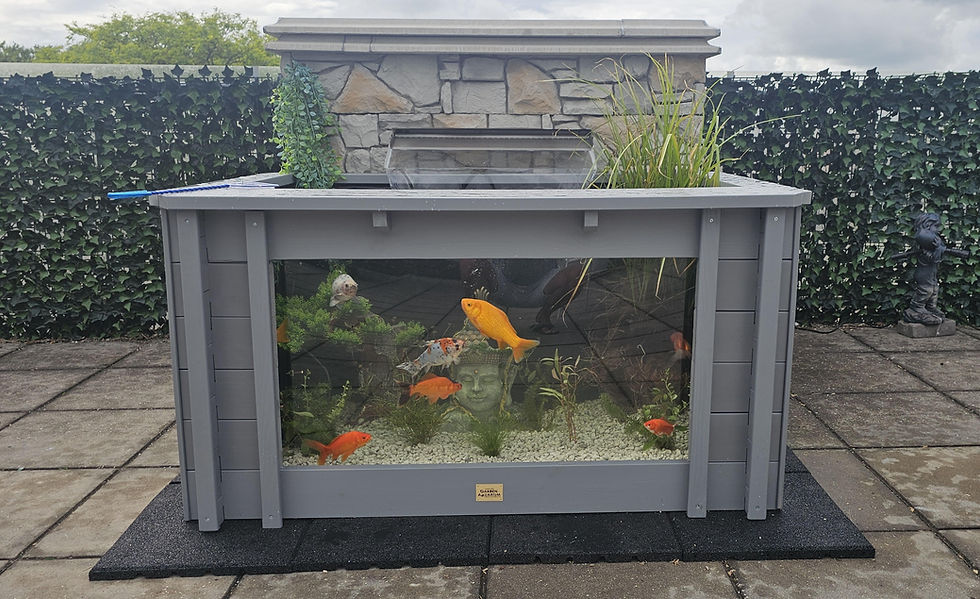
Choose a net with a mesh size small enough to catch leaves but open enough to let light and rain through. Stretch it tightly across the pond and secure it at the edges (if you have a Garden Aquarium pond cover, the net can easily be stretched across this and secured at the edges). Check the net after heavy wind or rain. Empty collected leaves before their weight pulls the net down.
A pond net is not a “fit and forget” item. It works best when cleared regularly through October and November.
3. Cut back dying pond plants
Aquatic plants naturally die back in autumn. If dead foliage is left in the pond, it sinks and adds to the sludge layer. October is the right time to tidy plants while you can still see what you are doing and before the water becomes icy cold.
Cut back yellowing or collapsing foliage from marginal plants, oxygenators, and water lilies. Use clean secateurs or pond scissors, and remove trimmings from the water straight away.
For water lilies, remove dying leaves and flower stems close to the crown, but avoid cutting into healthy growth. Hardy lilies can stay in the pond, provided their crowns are deep enough to avoid freezing.
Leave some structure around the pond if it does not fall into the water. Hollow plant stems and bank-side vegetation can shelter insects and wildlife. The aim is not to strip the pond bare. The aim is to stop rotting plant matter from sinking.

4. Clear excess sludge from the bottom
Every pond develops some sludge. It comes from fish waste, dead leaves, pollen, plant matter, and wind-blown dirt. A thin layer is normal. A thick, smelly layer can cause problems over winter because it decays when oxygen is already in shorter supply.
October is a sensible time to reduce sludge, but do it gently. Avoid stripping the pond back to a sterile base. Beneficial bacteria live in the pond ecosystem, including in some of the sediment.
Use a pond vacuum if the layer is heavy, or carefully scoop out debris with a net in smaller ponds. Work section by section and leave some areas undisturbed, especially if wildlife uses the pond. You can also use a solution called Sedi Free, which is a gentle cleaning solution that can be added without refilling the pond or dredging, etc. It provides a focused prevention of silt, long-term turbidity, and algal bloom by granulating with active oxygen which then sinks into the silt and oxidises it and rapidly decomposes the silt through special bacteria.

Do not do a major deep clean once temperatures have dropped sharply. Fish become less active as the water cools, and heavy disturbance can stress them when their metabolism is slowing down.
A good rule is simple: remove the excess, not every trace.
5. Test the water before winter sets in
Water can look clear and still have problems. October is a useful month to test the pond because there is still time to correct issues gradually before winter.
Test the basics:
pH
Ammonia
Nitrite
Nitrate
General hardness and carbonate hardness, if your kit includes them
Ammonia and nitrite should be zero in a healthy, mature pond. If either is present, reduce feeding, check your filter, remove rotting organic matter, and consider a partial water change.
pH can shift after heavy rain, leaf decay, or large clean-outs. Avoid sudden changes. Fish handle stable water better than water that is constantly adjusted.
If you keep koi or a heavily stocked pond, testing is especially useful in October. More fish means more waste, and colder water slows the biology that helps process it.
6. Adjust fish feeding as the water cools
Fish feeding needs to follow water temperature, not the calendar alone. In October, some days may still feel mild, while nights can quickly cool the pond.
As temperatures fall, fish digest food more slowly. Uneaten food sinks, decays, and pollutes the water. Overfeeding in October is a common cause of poor winter water quality.
Use a pond thermometer and feed according to the water temperature. As a broad guide, many pond fish need less food once water drops below about 10°C. Below this point, many owners stop feeding altogether, depending on the fish species and local conditions.
When fish are still feeding, switch to an autumn or wheatgerm-based food, which is easier to digest in cooler water. Offer small amounts and watch carefully. If food remains after a few minutes, remove it and feed less next time.
Healthy pre-winter feeding is about restraint. A hungry-looking fish in October is safer than a pond full of rotting food.

7. Check the pump, filter, and UV clarifier
October is a good time to inspect pond equipment before cold weather makes repairs unpleasant. Your pump and filter may have worked hard through summer, especially if algae growth was heavy.
Clean the pump cage, remove trapped leaves, and check that the impeller moves freely. Reduced flow can mean the pump is blocked, worn, or sitting in debris.
For filters, clean only as needed and avoid washing biological media in tap water. Chlorinated tap water can harm the helpful bacteria that live in the filter. Use pond water in a bucket when rinsing sponges or media.
The UV clarifier may not be needed through winter, as algae growth slows in cold, low-light conditions. Some pond owners switch it off for the season, while others leave systems running depending on the setup. If you turn it off, clean the quartz sleeve and make a note to check the bulb before spring.

8. Keep oxygen moving through winter
Cold water holds more oxygen than warm water, but winter ponds can still suffer if the surface freezes over completely. A sealed ice layer traps gases from decaying organic matter and limits gas exchange.
October is the time to plan how you will keep part of the pond surface open. Options include an air pump with an air stone, a waterfall feature, or a pond de-icer. The right choice depends on pond size, fish load, and how hard winters are in your area.
Place air stones near the surface rather than at the deepest point in winter. This helps maintain a small opening without mixing the coldest surface water too deeply through the pond. Fish often settle in the deeper, more stable water, and strong circulation can disturb that layer.
Do not smash ice with a hammer. The shock waves can stress or harm fish. If ice forms, use warm water in a pan placed on the surface to melt an opening gently.
A simple October pond maintenance checklist
Use this quick list as a final walk-round before winter:
October task | Why it matters |
Remove leaves and debris | Reduces decay and nutrient build-up |
Fit and clear pond netting | Stops heavy leaf fall reaching the water |
Cut back dying plants | Prevents dead foliage from sinking |
Remove excess sludge | Lowers the risk of poor winter water quality |
Test the water | Finds problems before cold weather |
Reduce fish feeding | Prevents uneaten food from polluting the pond |
Check pumps and filters | Keeps circulation reliable |
Plan winter oxygenation | Helps maintain gas exchange if ice forms |
October pond maintenance does not need to be complicated. The best approach is steady and gentle: remove what will rot, keep equipment working, feed less as temperatures fall, and make sure the pond can breathe if ice arrives.
Do those eight jobs now, and your pond has a much better chance of staying balanced through winter and waking up clean, clear, and healthy in spring.


Comments